
Below you will find out how to manage versioning within a Standard project. It is assumed that you have already created a project and started translating the first document version.
-
Creating a new version: upload the file and mark it online as a version.
-
Options: what is carried over from the previous version.
-
Complete and archive: which jobs close, and where the old file goes.
Creating a New Document Version
-
Upload the new document version from the Documents tab. Rename the new file, for example filename-v2.
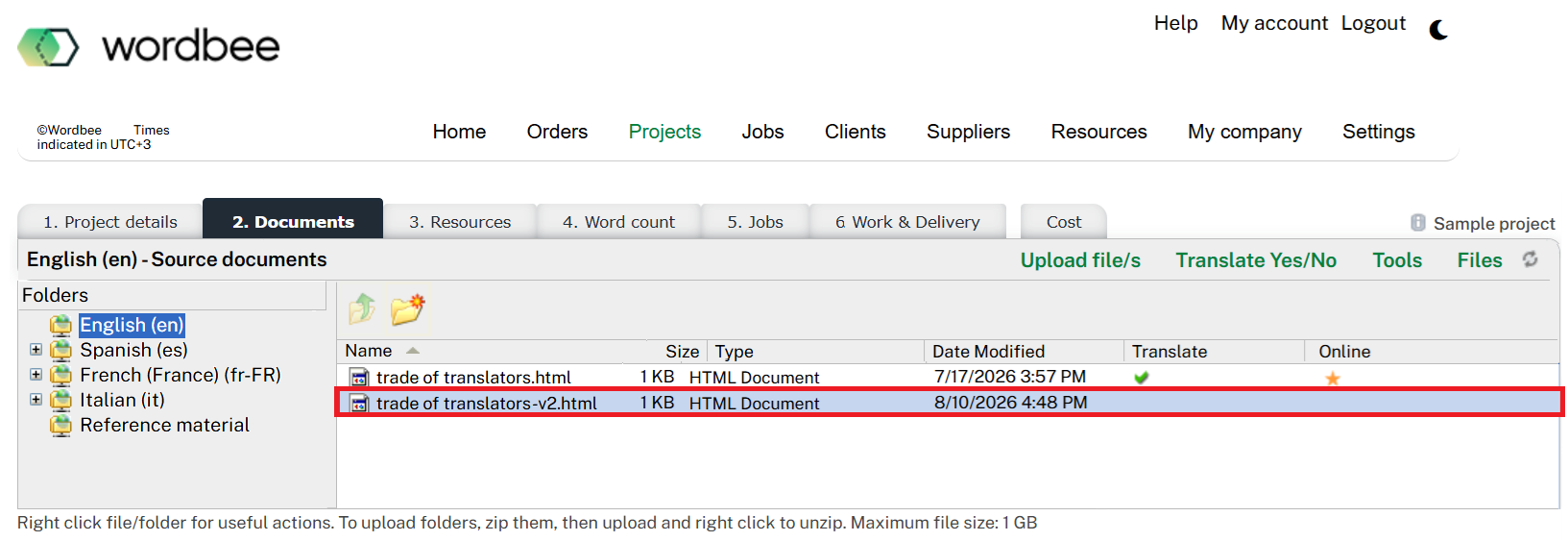
The new version needs a different filename: a file named like an online document cannot be marked online again. If you complete and archive the previous version, the new file takes the original name automatically.
-
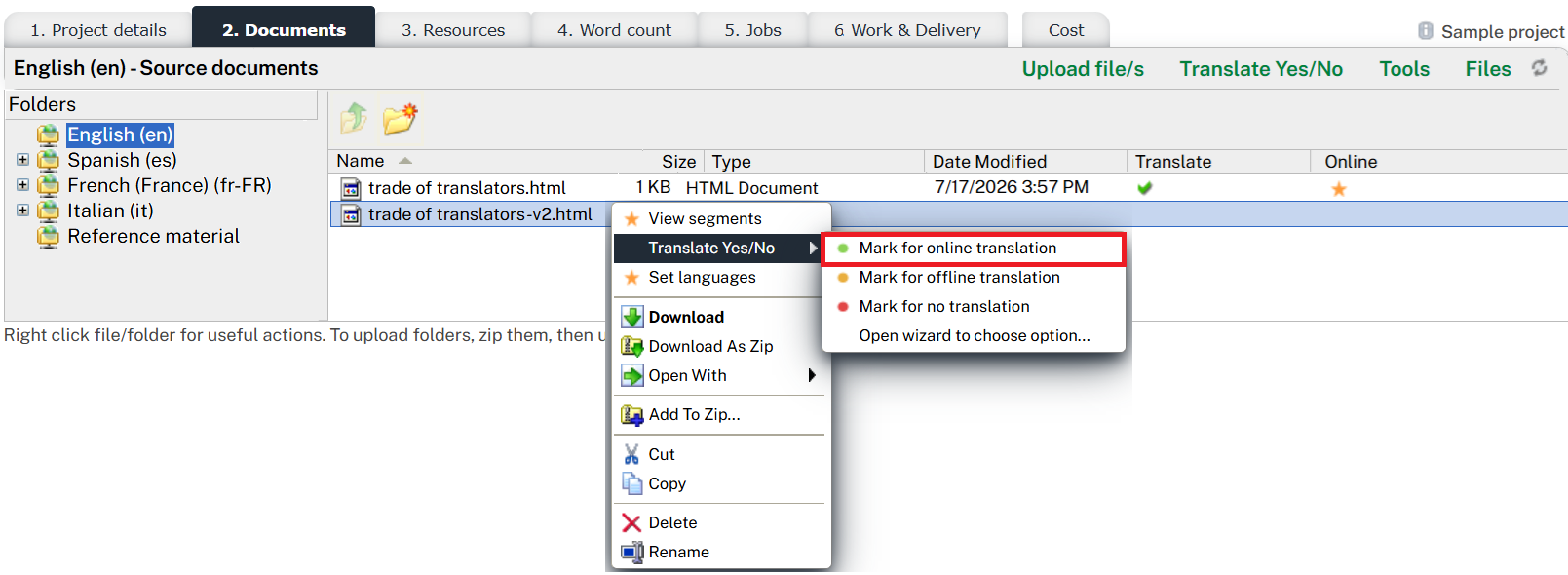
Mark the document for online translation: right-click the file, then select Mark for online translation.
-
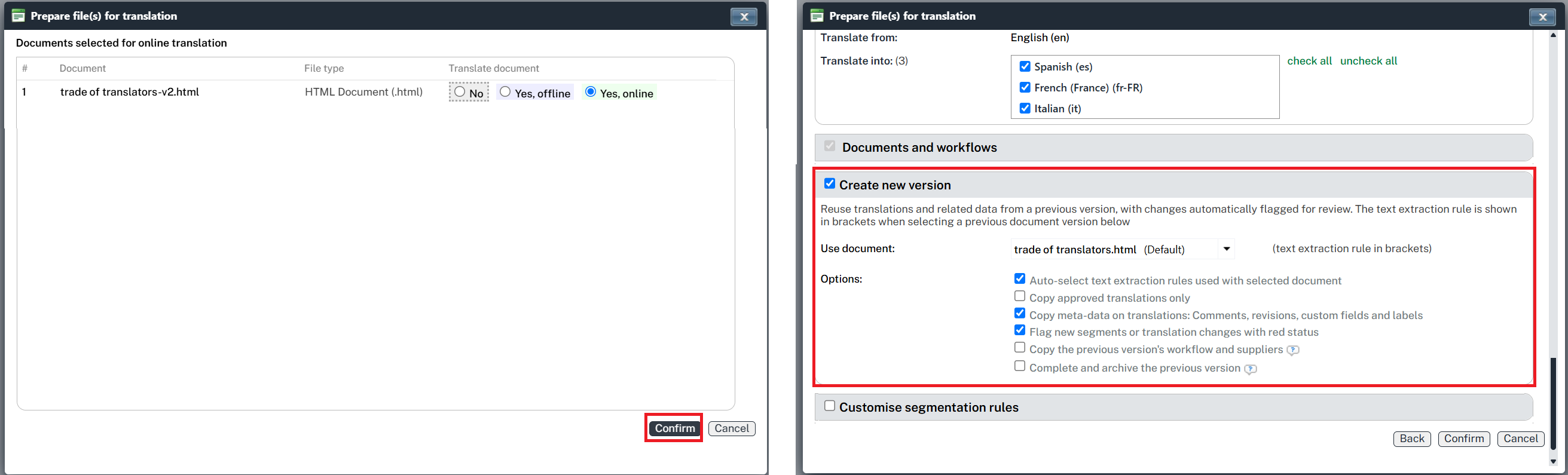
Confirm the first popup. On the second, tick Create new version and select the version to build on. Translations of identical segments are copied over, respecting each segment's context and position. The options below control what else is copied.
-
Click Confirm. The word count runs and the new jobs are created. They go to the same suppliers as before only if you tick Copy the previous version's workflow and suppliers; otherwise you set up the workflow yourself.
Options for the New Version
|
Option |
What it does |
|---|---|
|
Auto-select text extraction rules used with selected document |
Parses the new version with the same text extraction rules as the document you select. |
|
Copy approved translations only |
Copies only translations with the Approved status. Clear it to copy any status. |
|
Copy meta-data on translations: Comments, revisions, custom fields and labels |
Also copies comments, revisions, custom fields, and labels. Clear it to copy the text only. |
|
Flag new segments or translation changes with red status |
Gives new or changed content a red status, so it stands out during translation. |
|
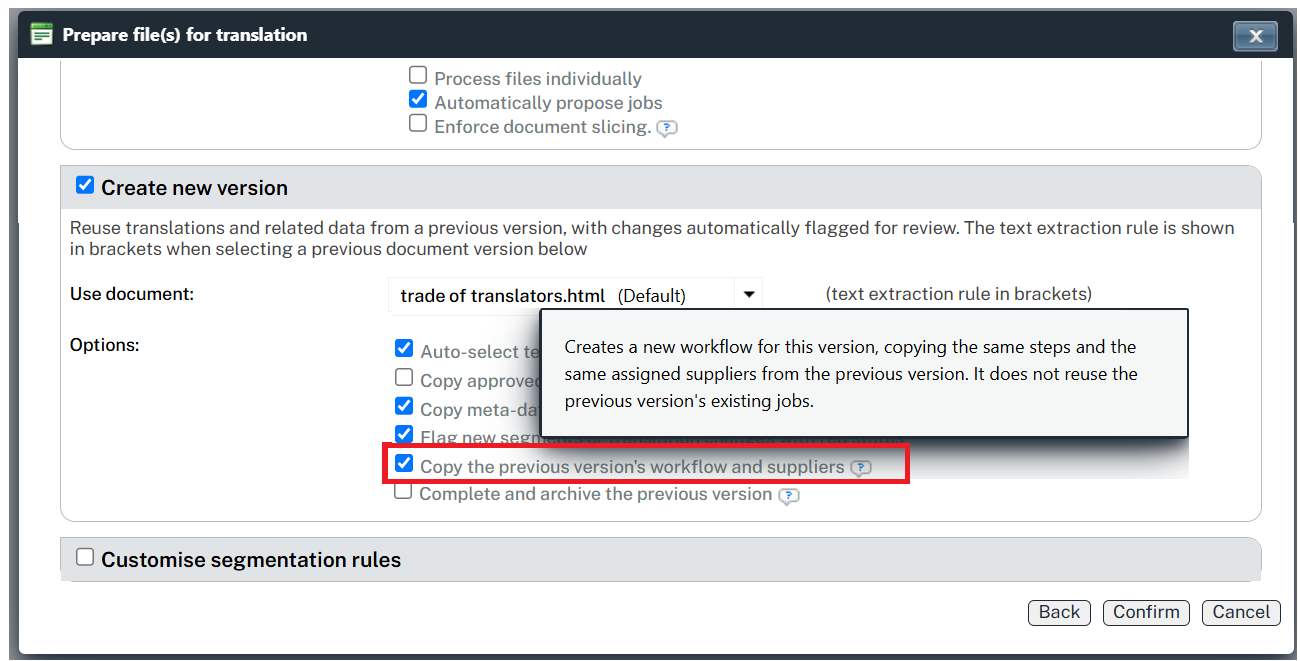
Copy the previous version's workflow and suppliers |
Creates a new workflow with the same steps and suppliers as the previous version. Existing jobs are not reused, and cancelled jobs are not copied. |
|
Complete and archive the previous version |
Completes the jobs where the previous version is the only document, then archives the previous file so the new one takes its name. Jobs that contain other documents are left unchanged. |
The last two options are independent, and both start clear every time.
What Happens When You Complete and Archive
This example replaces manual.docx with a new version uploaded as manual-v2.docx:
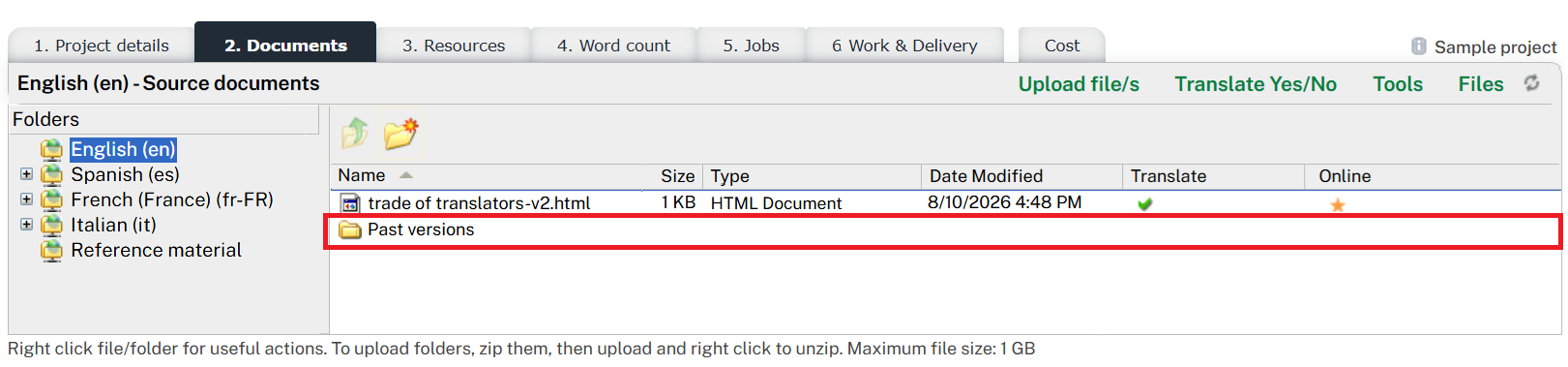
|
|
Before |
After |
|---|---|---|
|
Previous version's jobs |
Stay open alongside the new version's jobs |
Marked Completed where the previous version is the only document. Jobs that contain other documents are left unchanged, with a jobs not completed link to review them |
|
Previous file |
|
|
|
New file |
|
|
|
Delivery |
Both files can be finalized and delivered |
Past versions stay in the library for traceability, but are excluded from finalization and delivery |
|
Job references |
Jobs containing several documents point at the previous file where it was |
The reference is updated to the file's new location |
Leave the option clear to keep both versions in place, for example when both must be delivered.