
The Translation Editor includes Quick QA, a support tool for translators. Quick QA detects text formatting issues in segments and can correct them automatically.
Running Quick QA
Follow these steps to run Quick QA:
-
Set up the language pair you want to run this action for. Then configure the categories and choose whether problems should only be flagged or fixed immediately. You can also exclude segments with a green status from the check.
-
Optional: Click the eye icon to preview how many changes will be made before you apply them.
-
Apply the rules you selected in step 1.
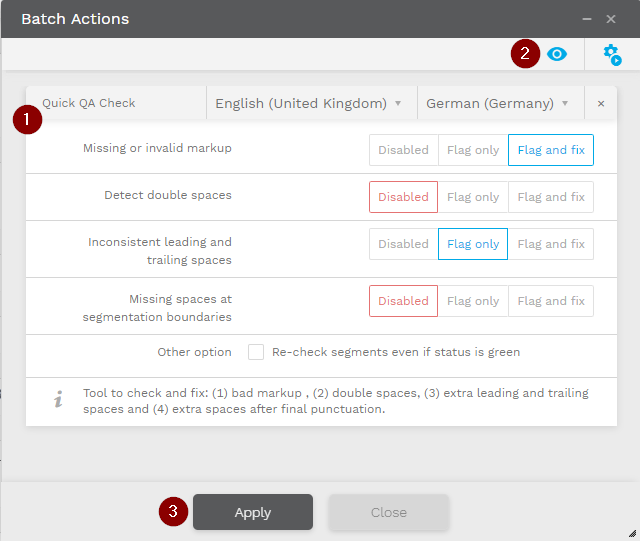
Quick QA Categories
|
QA Category |
Explanation |
|---|---|
|
Missing or invalid markup |
This rule checks that all tags that appear in the source language are present in the target language and placed correctly, including tags that are nested or crossed differently from the source. When you choose to fix issues, Quick QA moves misplaced tags next to the words they belong to. Tags that are already correct stay where they are, even if you changed their order to follow the target language's word order. Quick QA never changes your translated text. If it cannot confirm that a fix gives a document that can be built, it leaves the segment unchanged and reports it as not fixed, so you can correct it by hand. Note: Sometimes translators need to change the order of tags or move them to a different target segment because the structure of the two languages is different. If you use the flag and fix option, please make sure to exclude these segments from Quick QA by marking them green. |
|
Detect double spaces |
This rule detects double or multiple spaces between words in a segment. |
|
Inconsistent leading and trailing spaces |
This rule compares the source and target segments and notifies you if the number of spaces at the beginning or end of a segment differs. |
|
Missing spaces at segmentation boundaries |
When text is split into segments or sentences, either by the system or by you, the spaces, tabs, or newlines between the segments are hidden by default in the Translation Editor. When the translation is finished, these spaces are inserted back into the translated document. However, some Asian scripts (such as Chinese or Japanese) don't use spaces after the final punctuation mark. When translating them into a language like English, this lack of spaces between sentences leads to bad layout in the target file. This rule checks whether the translator should insert spaces after the last punctuation mark in a segment to avoid this kind of problem. |
Reviewing Results
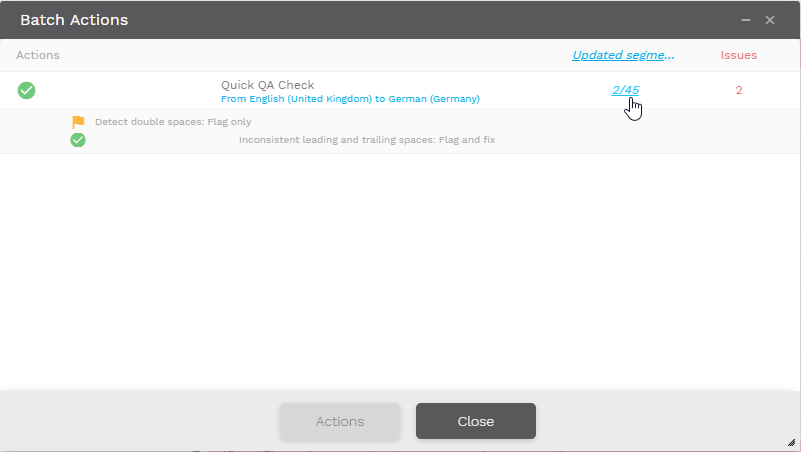
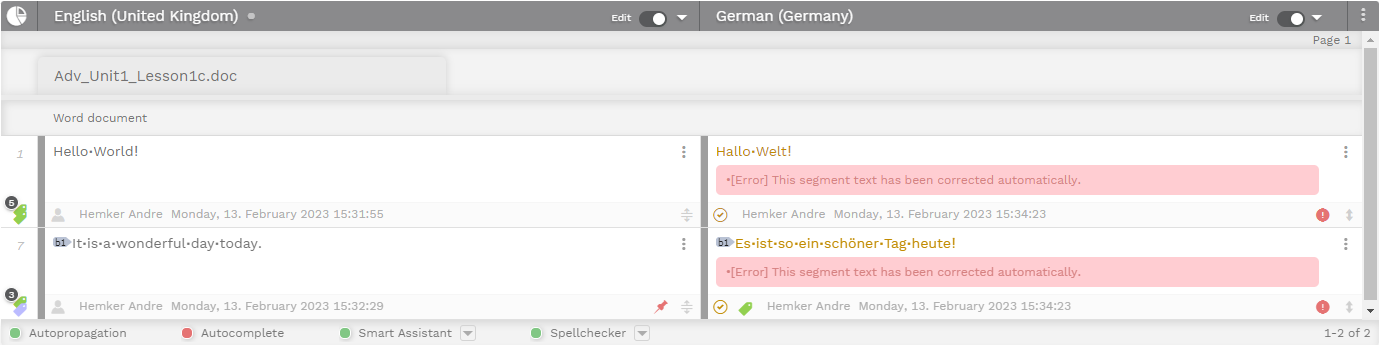
When Quick QA is complete, you see a report with the number of issues found. Click the number of segments to filter the grid to the corresponding segments.
Each flagged or fixed segment is now marked with a QA error that describes the automated fix or the issue found during Quick QA. To clear the errors, use the Clear QA issues option in the QA Checks tab.
Learn More
-
QA Categories: See every QA rule and its options.
-
Creating a Custom QA Profile: Create QA profiles with different sets of rules.