
Wordbee Translator integrates Optical Character Recognition (OCR) technology that enables you to extract the text contained in images such as PNG, JPG, TIFF, ICO, BMP and many more. The tool returns an HTML file, ready to be edited or translated.
Read this How-to article on our KB to learn how to translate images with OCR:
OCR EnginesHow to configure
The OCR technology is provided by Google and Microsoft. You first need to subscribe with the provider and obtain credentials to use them in Wordbee Translator.
Go to Settings > Image to Text (OCR) and enable the systems you need:
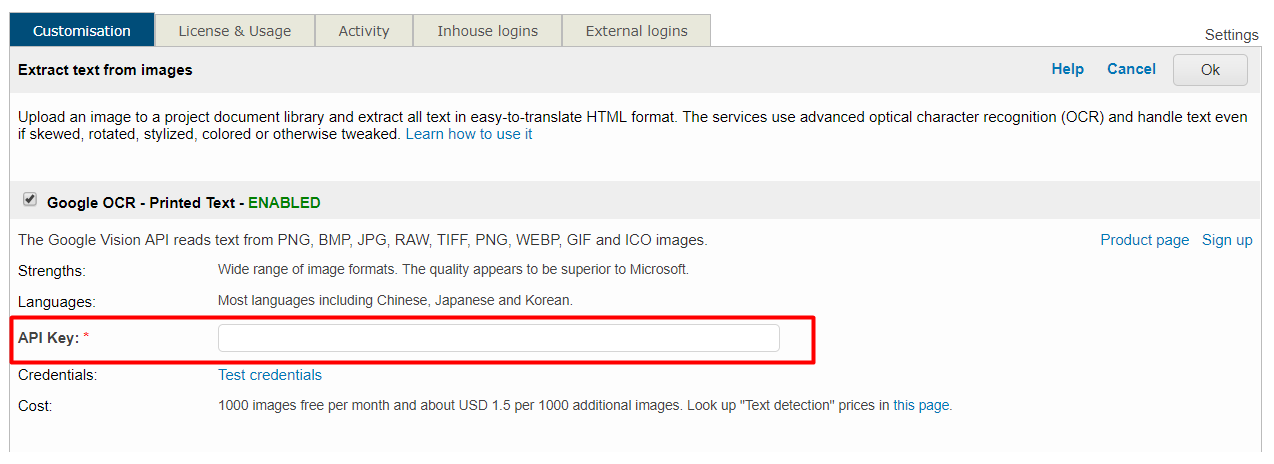
Systems available in Wordbee Translator that support OCR:
-
Google OCR - Printed Text: extracts printed text (supported file formats: PNG, BMP, JPG, RAW, TIFF, WEBP, GIF and ICO images).
-
Microsoft OCR - Printed Text: extracts printed text in more than 160 languages (supported file formats: BMP, JPG and PNG images).
-
Microsoft OCR - Handwritten Text: extracts handwritten text in 9 languages, including English (supported file formats: BMP, JPG and PNG images).
Both Microsoft systems use the same modern recognition engine, which detects printed and handwritten text automatically. For the full list of languages each provider supports, see the Microsoft OCR language support page.
To configure a Microsoft system, enter the endpoint URL and key of your Azure Computer Vision resource, exactly as shown in the Azure portal. Previously saved settings keep working: you do not need to change anything if Microsoft OCR is already configured on your platform.
Microsoft accepts images of at least 50 x 50 pixels and up to 4 MB. Smaller images are rejected with a size message before processing.
If you have any questions about the sign-up process with Google or Microsoft, please contact our support team.
Related topics
Machine Translation Settings (enabling different machine translation engines)
Configuring image files for online translation